March 2026

Building TrueAdvisor, a platform helping you find an advisor you can trust
Team: Design, Product Management, Engineering and Leadership
Design Responsibilities: Qualitative research, brand identity, meeting with founder, prototyping, and design handoff
What shipped: A brand identity, website, and product experience
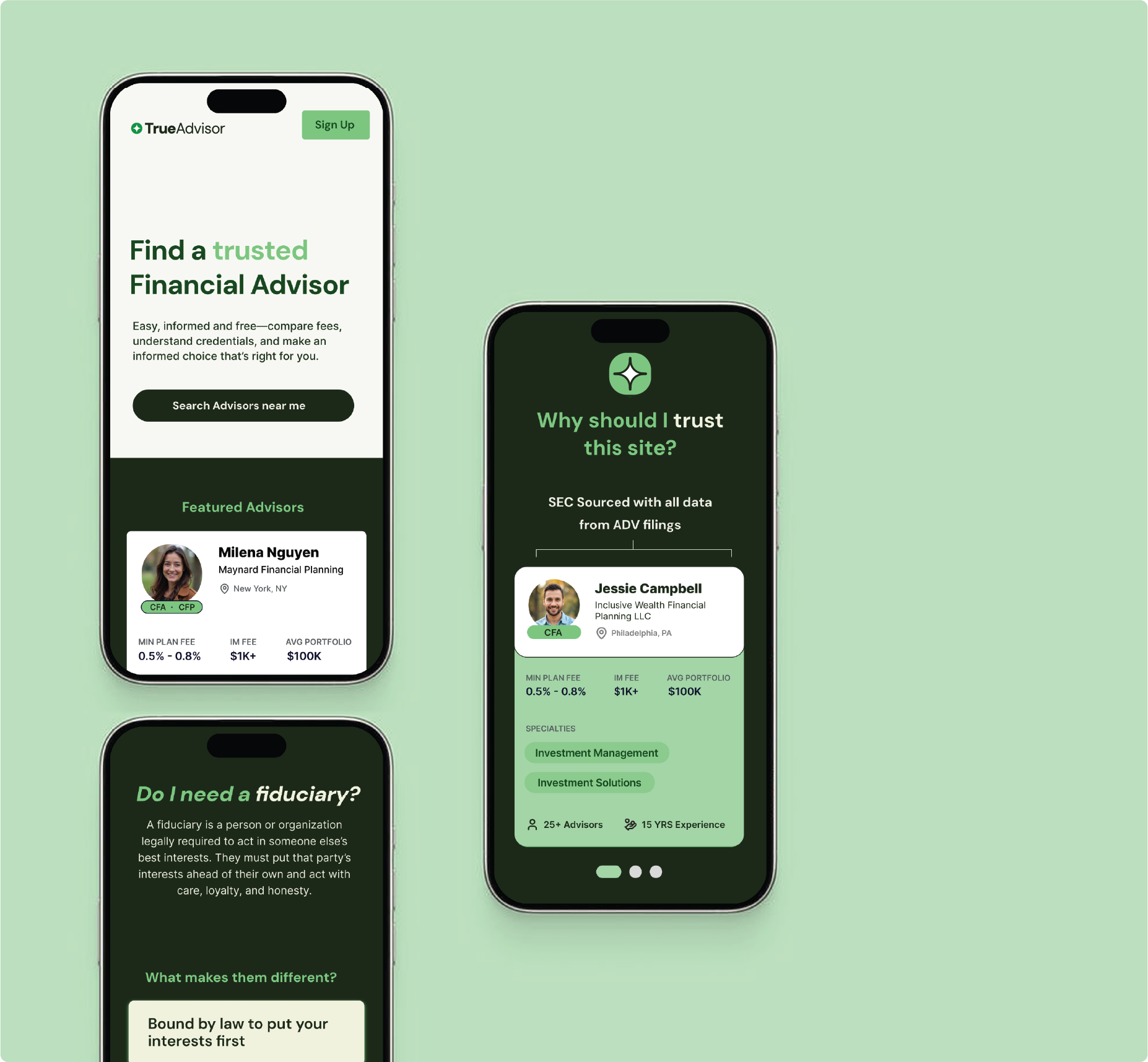
Fees are unclear, qualifications are hard to verify, and it’s tough to tell who’s a good fit. Max, an engineer, built True Advisor to fix this: a free tool that uses public SEC data to help people find and book an advisor.
He had a wireframe-level site and a clear point of view. He needed a designer to turn it into a brand and a product people would trust.
I started with research. I looked at financial companies (H&R Block, NerdWallet, Fidelity, Vanguard) and at booking and search tools (ZocDoc, Square, TaskRabbit). I wanted to see how they help people find, compare, and contact someone, and which UI patterns people already know, so we could build faster and users wouldn’t have to learn anything new.
Finding a trust-worthy financial advisor is hard.
Design decisions
1. Move the quiz into the search, not before it
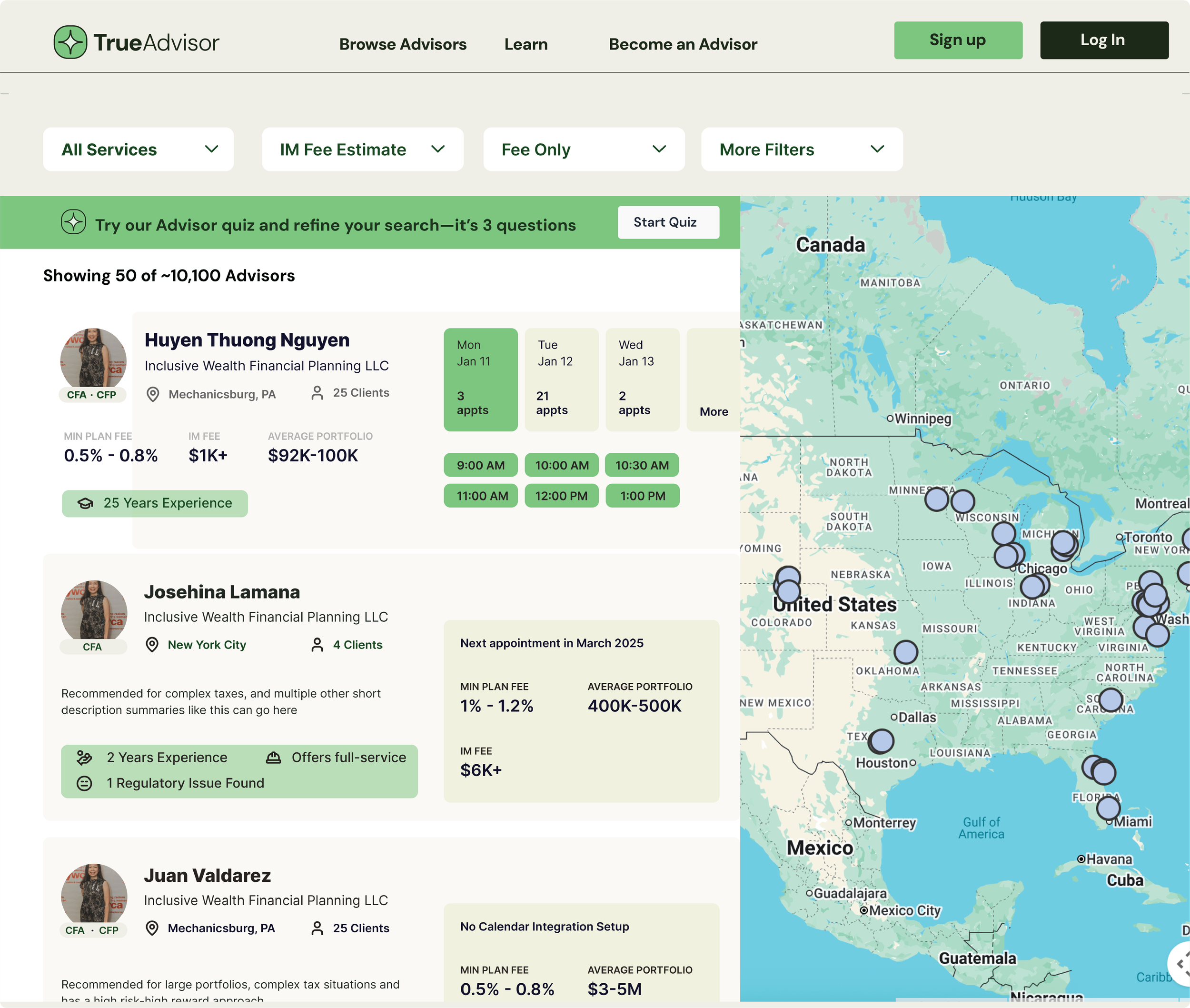
The first version was a multi-step flow on the marketing site. It was clunky, and it kept people from seeing the product’s value. I proposed layering it over the search experience as a filter instead. The quiz overlays the map, so people see potential advisors while they answer and watch their results narrow.
2. Build one card system that handles every kind of advisor
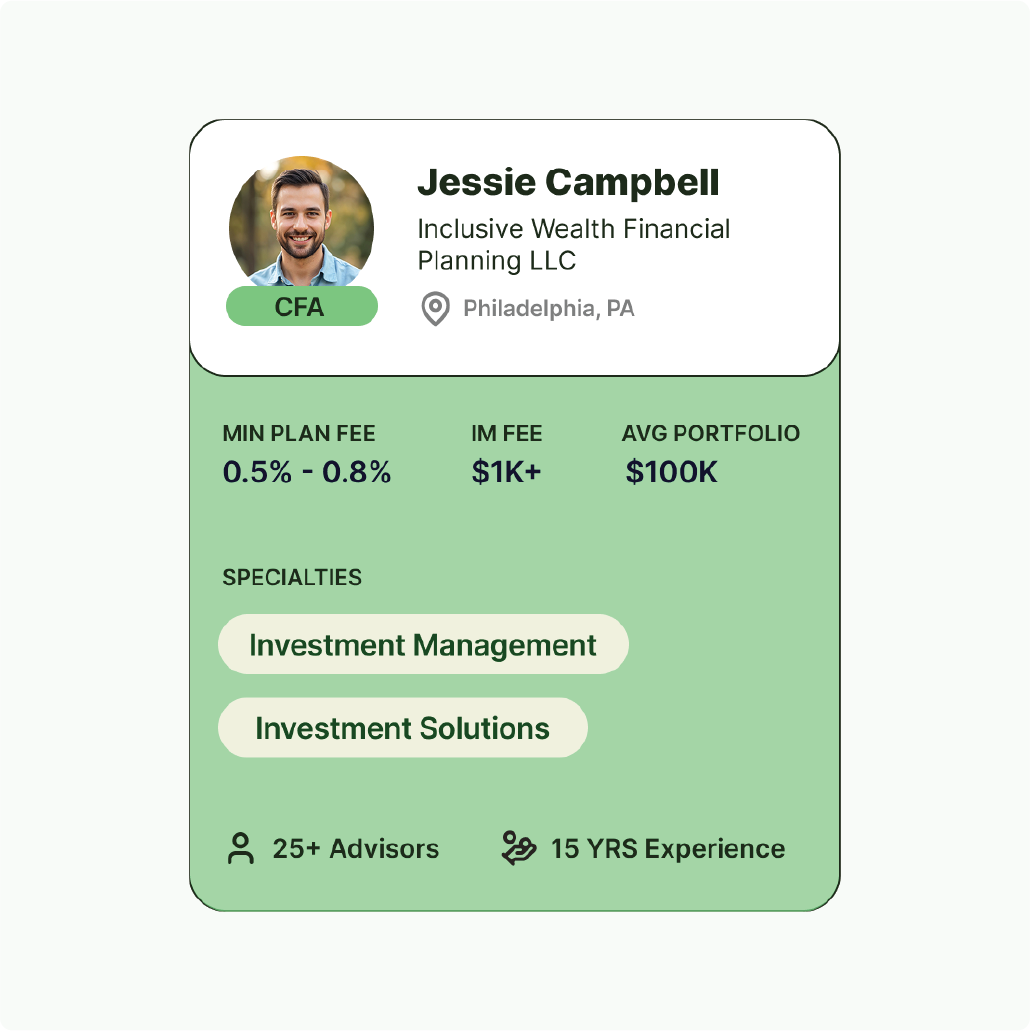
Advisors differ: some have calendar integrations, some have open appointments, some only have a contact button, and some claimed their profile while others are just listed. Instead of designing each case separately, I built one card that varies by what the advisor offers. Claimed profiles get a distinct treatment, so people can see who’s integrated with True Advisor.
3. Explain every confusing term where it appears
Fees, regulatory issues, and certifications are where people get lost. Rather than sending people to a glossary, I added a popover to anything that wasn’t common knowledge, so context is right there. I made these calls with my own judgment as someone outside finance. If I didn’t get it, I assumed our customers wouldn’t either.